
Met Police win landmark court case over use of live facial recognition in London
By Tilly O'Brien 22nd Apr 2026
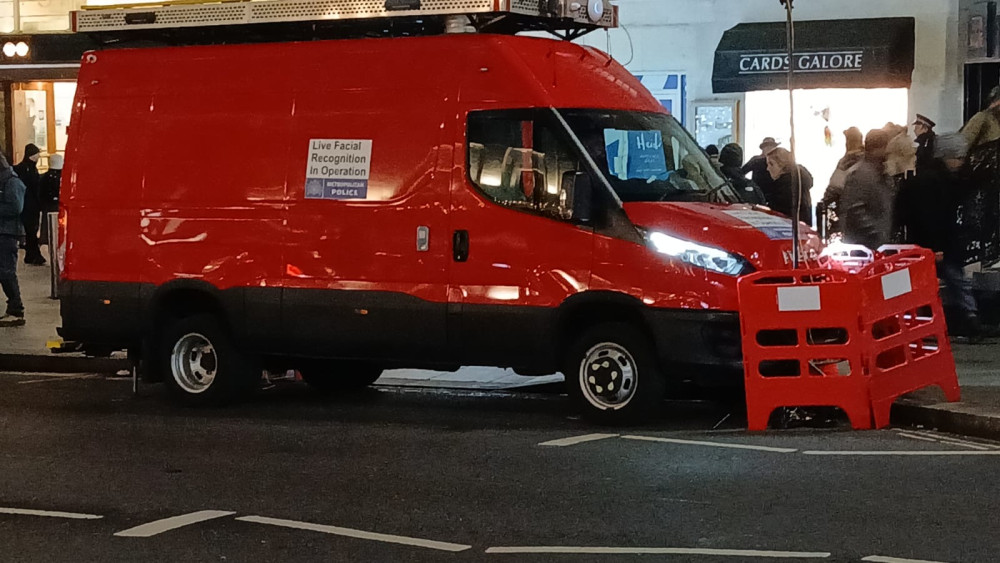


The Met Police won a court case yesterday (Tuesday, 21 April), regarding the use of Live Facial Recognition (LFR) systems across London.
Youth worker Shaun Thompson and Silkie Carlo, from campaign group Big Brother Watch, brought the claim over concerns that facial recognition could be used arbitrarily or in a discriminatory way.
However, the court concluded that the Met's policy complies with human rights law, and contains clear, precise and effective safeguards.
Thompson, who volunteers with young people affected by violence, was misidentified by the technology.
Mr Thompson and Ms Carlo's lawyers told a hearing earlier this year that facial recognition is "similar to a DNA profile" and that plans to mount permanent installations in the capital would make it "impossible" for Londoners to travel without their biometric data being taken and processed.
Scotland Yard defended the legal challenge, brought over its live facial recognition policy from September 2024, telling the court in London that the policy was lawful.
Lord Justice Holgate and Mrs Justice Farbey said in a judgment on Tuesday: "The policy provides the claimants with an adequate indication of the circumstances in which LFR will be used and enables them to foresee, to a degree that is reasonable in the circumstances, the consequences of travelling in an area of London where LFR is in use."
The judges also said that Mr Thompson and Ms Carlo's human rights "have not been breached".
Download our Nub News App!
- It’s FREE and available now- Breaking news notifications
- Your Town in Your Pocket


In a public statement, the Met Police Commissioner, Sir Mark Rowley, welcomed the decision.
He said: "This legal judgment is a significant and important victory for public safety.
"It confirms that the Met is right and acting lawfully to use the best modern technology to reduce crime and keep pace with the evolving threats that we face.
"Live facial recognition works and it's one of the biggest breakthroughs for policing.
"It's actively removing thousands of dangers and wanted offenders from London's streets, including individuals who pose a serious and ongoing threat to our communities.
"Including those wanted for the most serious offences, such as rape, domestic violence, and child sex offences."
Sir Rowley added that the Met's data shows that the technology is "highly accurate and fair".
"And we've already made more than 2,100 arrests using it," he said.

Sir Rowley continued: "Last year alone, more than three million faces walked past the cameras, resulting in only 12 false alerts, none of which were an arrest."
He said that the use of LFR systems "does not breach the Human Rights Act".
However, Dan Squires KC, for Mr Thompson and Ms Carlo, told a hearing in January that the force used facial recognition 231 times last year and scanned around four million faces, scanning more than 50,000 faces in four-and-a-half hours in Oxford Circus in December.
He said the technology turns people's facial characteristics into coded data, which is then compared with people on a "watch list".
In their 47-page ruling, Lord Justice Holgate and Mrs Justice Farbey said: "Any intrusion to which the claimants are exposed by the deployment of LFR is not directed at them in the sense that, save for unintended errors, the Metropolitan Police has no interest in their biometrics or in engaging with them."
They also said that the "risk and potential scope for discrimination on grounds of race was no more than faintly asserted" at the hearing, adding: "We are not able to accept, on the thin submissions advanced before us, that concerns about discrimination infect the legality of the policy."
Sir Rowley added: "The courts have confirmed our approach is lawful. The public supports its use. It works. And it helps us keep Londoners safe.
"The question is no longer whether we should use live facial recognition – it's why we would choose not to."

Ms Carlo said the judgment was "disappointing" but that the legal battle was "far from over", with Big Brother Watch crowdfunding for a bid to challenge the ruling.
She said: "There has never been a more important time to stand up for the public's rights against dystopian surveillance tech that turns us into walking ID cards and treats us like a nation of suspects."
Mr Thompson said that LFR was "like stop and search on steroids" and that he would seek to challenge the ruling to "protect Londoners" from "mass surveillance".
READ MORE: Live facial recognition van deployed outside Richmond station as police make arrests
We want to provide Richmond with more and more clickbait-free local news. To do that, we need a loyal newsletter following. Help us survive and sign up for our free weekly newsletter by clicking the link HERE.
Download our Nub News App:
- It’s FREE and available now
- Breaking news notifications
- Your Town in Your Pocket

Share: