
Unprecedented 'death bloom' looms at Kew Gardens
By Cesar Medina 29th Sep 2026
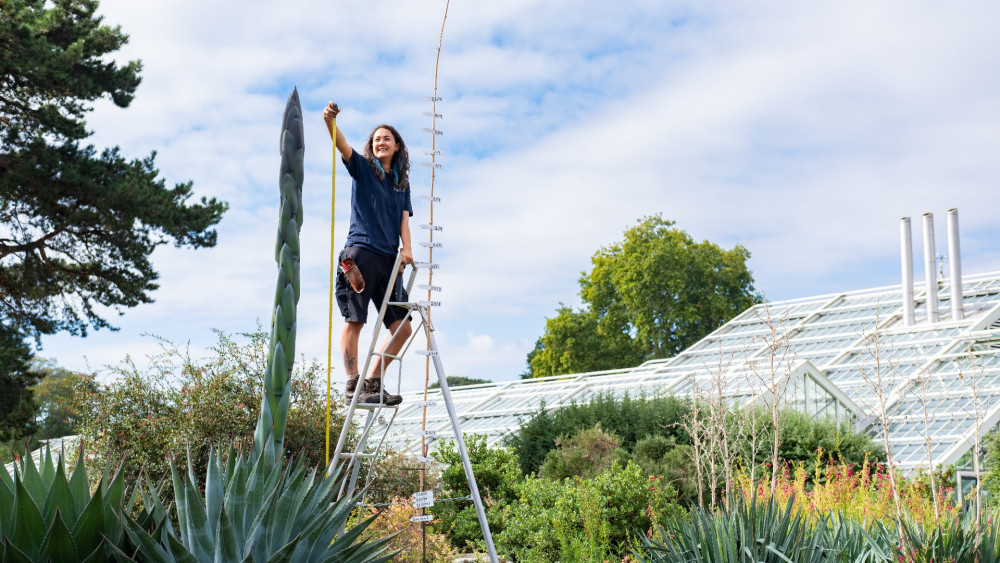


The 'death bloom' of an Agave montana at Kew Gardens has prompted horticulturists to search for a viable pollen partner to make seed for a new generation of plants.
The A. montana, which is native to the mountainous habitats of northeastern Mexico and sits in Kew's Rock Garden next to Davies Alpine House, has produced an asparagus-like stalk (called a peduncle) growing at a rate of 10cm a day and is now measuring about 3m in height, signalling the plant has entered the final stages of its life.
Kew's Alpine and Rock Garden team will continue to monitor the plant and its progress over the coming weeks and months, but once the flowering starts in earnest, it will be a race to see the plant before it's gone.
The south west London based gardens said the bloom will be announced on its social media channels.
Prompted by the record-breaking temperatures experienced this summer, the UK's hottest-ever on record, the succulent has channelled its stored energy and nutrients into producing the peduncle, cannibalising its older leaves in the process.
Monocarpic plants like A. montana can spend up to decades without flowering, before producing one enormous bloom full of thousands of individual flowers, and this particular specimen was planted about 20 years ago.
These provide sustenance for a wide variety of pollinators such as bees, birds and even bats.
However, all monocarpic plants die once they go through a single reproductive cycle.
Download our Nub News App!
- It’s FREE and available now- Breaking news notifications
- Your Town in Your Pocket


In the wild, Agave coordinate their blooms in a phenomenon known as masting to increase their chances of cross-pollination and successful seed germination.
In cultivation, trained horticulturists can manually pollinate the plant using hand brushes and pollen collected from other flowering specimens.
Kew Gardens say this is an extreme rarity here in the UK and Kew's horticulturists are calling for plant collectors, gardeners and botanists across the UK and elsewhere to get in touch if they have any viable pollen.
And though the plant is reportedly able to self-pollinate, doing so with the pollen of another individual would ensure a higher success rate and a better gene pool for the resulting seeds.
Anna Lim, Botanical Horticulturist at the Royal Botanic Gardens, Kew, commented: 'Hopefully, we'll be able to pollinate it and produce some viable seed.
"I'm already making enquiries in the Agave community to see if we can track down the perfect pollen donor!
"This immense inflorescence is an amazing botanical event, and it's something we might only get to witness once every couple of decades.
"It's a fantastic opportunity to see nature putting on a spectacular show and learning from it - we will be preserving some of the flowers in Kew's Herbarium and Spirit Collections.

"Once it blooms, I'd encourage everyone to come and see it while they can. Events like this are incredibly rare - it really could be a once-in-a-lifetime botanical experience."
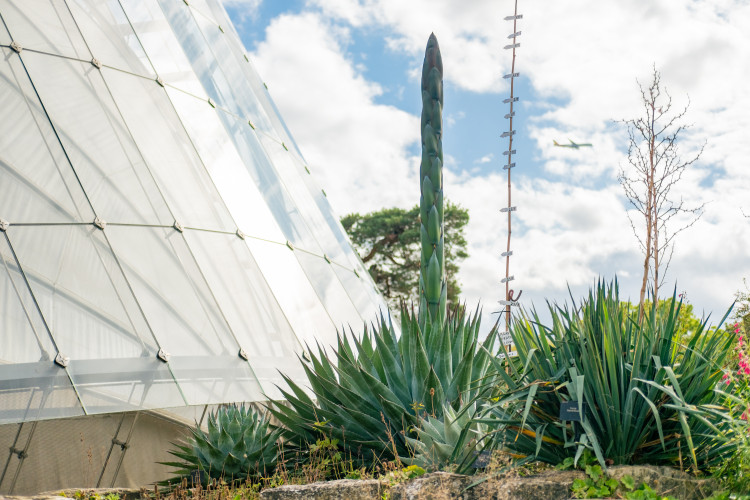
Historic records indicate this is the first time an A. montana has flowered at Kew Gardens, and only a few other specimens are known to have ever flowered outdoors in the UK, with the most recent bloom in Lytham in Lancashire this summer and before that at East Ruston Old Vicarage in Norfolk in 2023.
A. montana was only officially described as a species in 1996 and is still relatively uncommon in commercial cultivation, but Kew's horticulturists are looking at it as one of the many plants that could help the UK's gardens adapt to climate change.
According to Thomas Freeth, Head of Collection Management at Kew, the conditions experienced this year in London have directly contributed to the flowering, as they did a few years ago in Norfolk when the mercury hit 40°C.
He said: "The recent weather has absolutely contributed to its flowering, and the plant has very much adapted to thrive in these conditions. In many ways it's a telltale sign of our rapidly changing climate.
"We know the southeast of England is going to experience much warmer and drier summers as we head into the future, especially here in London, which is expected to resemble Barcelona by 2050, so we need to seriously think about how we're going to adapt our landscapes to cope and thrive in these conditions.
"The Agave doesn't require much watering, is very tolerant to the heat and yet can withstand our cold and wet winters, so I'm confident we're going to see much more of it and related species planted in our gardens in the coming years."

READ MORE: Water supplies return across Richmond after burst pipe.
We want to provide Richmond with more and more clickbait-free local news. To do that, we need a loyal newsletter following. Help us survive and sign up for our free weekly newsletter by clicking the link HERE.
Download our Nub News App:
- It’s FREE and available now
- Breaking news notifications
- Your Town in Your Pocket


Share: