Children can 'profoundly' change family dynamics says Richmond therapist
By Guest author 30th Oct 2026


This blog was written by Relationship Therapist Lucas Dawe.
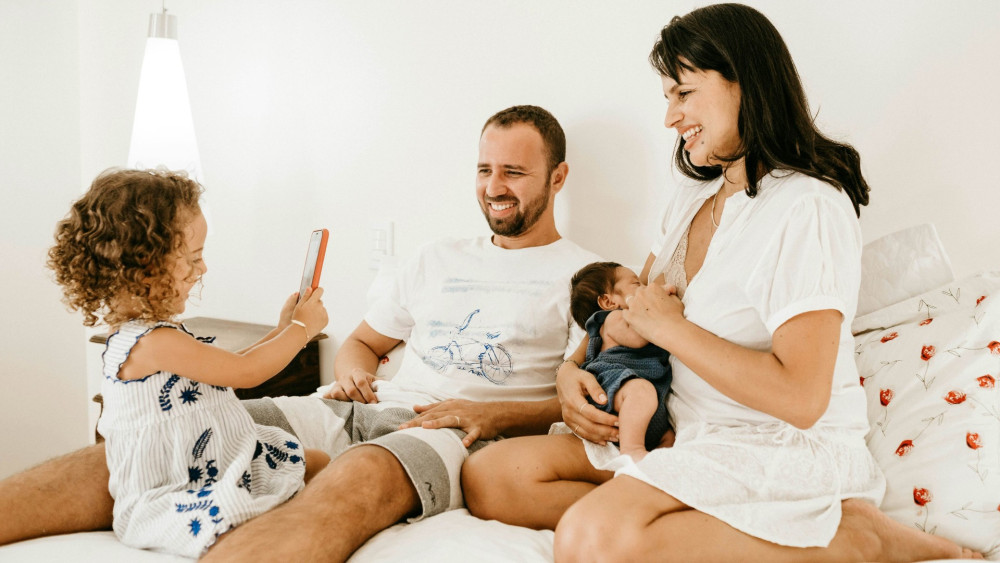
Most couples know that having a baby will change their lives. What they may be less prepared for is how profoundly it can change their relationship with each other.
Before children, a couple has considerable freedom to create a world of their own. They develop their own routines, make compromises and, often, enjoy the ways in which they are different.
One person is spontaneous, the other organised. One worries about money, the other is more relaxed. One likes everything done properly, the other is happy with "good enough". Those differences can even be part of the attraction.
Then a child arrives. Suddenly, decisions that once affected two adults affect somebody for whom both feel an enormous sense of responsibility.
Differences that were previously charming, or at least tolerable, can begin to feel imposing, even confrontational.
Being relaxed about bedtime is no longer just a personality trait. It becomes a view about how your child should be raised.
Spending money differently can become an argument about what your family needs. A disagreement about discipline can feel like a disagreement about what kind of person you want your child to become.
Download our Nub News App!
- It’s FREE and available now- Breaking news notifications
- Your Town in Your Pocket


It can feel like the stakes have changed.
And there is another significant shift. Two has become three, or perhaps four or five. The couple who were once primarily lovers and partners are now also parents.
Attention that was previously available to each other is redirected. Conversations become practical. Who is doing the nursery run? Have we bought nappies? Who is getting up tonight?
Sex and intimacy can change too, particularly when both people are tired or struggling to find any part of the day that still belongs to them.
It is easy in these circumstances for each partner to feel that the other has changed.
But becoming a parent can also bring parts of ourselves into the relationship that our partner has never encountered before.
We all arrive at parenthood with an idea of what being a family means. Much of it comes from the family in which we grew up, from the parental role model we internalised.
We may want to recreate what felt good about our childhood, or be determined to do the opposite of what hurt us. Often, we are not particularly conscious of either.

One parent may find it unbearable to hear their child cry. Another may believe children need to learn to cope with frustration.
One may want clear rules and routines, while the other experiences those rules as unnecessarily strict. Neither is simply making a decision about parenting.
Each may be responding to their own experience of having been a child and this can make disagreements surprisingly emotional.
A partner who appears to be arguing about screen time may actually feel that something much more important is at stake: whether their child feels cared for, develops independence, is protected enough or is being given the childhood they themselves wished they had.
It can be particularly difficult to tolerate the idea that there may not be a perfect answer. Parenthood creates enormous pressure to get things right.
Faced with the responsibility of shaping another person's life, differences between partners can start to feel threatening: 'If I believe this is the right way to raise our child, what does it mean if you believe something completely different?'
As a result, couples can find themselves trying to persuade each other rather than understand each other.
There is also a loss involved in becoming parents that is not always easy to acknowledge. Even when children are deeply wanted and loved, the arrival of a child means giving up some of the relationship that existed before them.

Freedom, spontaneity and time together may all become harder to find. Resenting that loss can feel unacceptable, so frustration may instead get directed towards a partner.
Couples therapy can provide somewhere to think about these changes without reducing them to who is right and who is wrong.
Sometimes the useful question is not 'Which of us has the better approach?' but 'Why does this matter so much to each of us?'.
Understanding what each partner brings from their own history can make disagreement feel less like a threat and more like something that can be thought about together.
Children inevitably change a relationship. The task is not to preserve the couple exactly as it was before they arrived.
It is to make room for a new relationship: one that can accommodate different ways of parenting, accept that neither partner will always get it right, and allow two people to remain a couple while they learn how to become a family.
The author, Lucas Dawe, is a psychodynamic couples and relationship therapist.
If you would like to talk about any issues raised in this blog, click here to find a couples therapist in Richmond at The Greenhouse Therapy Rooms.

The Greenhouse Therapy Rooms is a sponsor of Richmond Nub News, without our sponsors, our Richmond online newspaper would not be possible. Thank you.
Download our Nub News App:
- It’s FREE and available now
- Breaking news notifications
- Your Town in Your Pocket

Share: