Sarah Olney: 'The system is too predicated on winners and losers'
By Cesar Medina 29th Mar 2026
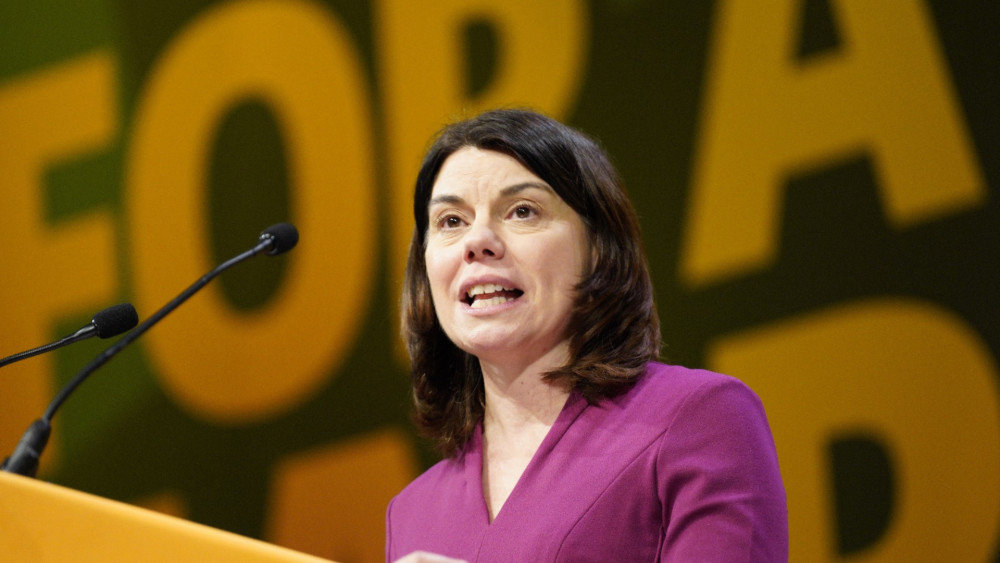


"The system is too predicated on winners and losers, when that's not how it should be," said Richmond Park MP Sarah Olney when she sat down with Nub News to discuss electoral reform ahead of local elections on 7 May 2026.
The party she represents, the Liberal Democrats, have long backed a change to the electoral system from first-past-the-post (FPTP) to proportional representation (PR), making votes cast equal to seats won in council or Parliament.
Olney believes the implementation of proportional representation, especially in local government, will allow for more diverse voices and greater collaboration across party lines.
She told Nub News: "There are reasons why people defend the constituency first-past-the-post system for general elections, but actually for local elections, proportional representation makes a lot more sense because you have multi-member wards, so you can much more easily match up to the proportion of votes that are cast for each of those parties at the local election level."
In the 2024 general election, we saw first-hand the limitations of the FPTP system, with Labour winning a majority government with 33.7% of the national vote, yet going on to gain around 63% of the seats in the House of Commons.
Olney continued: "The current Parliament goes to show what happens when you have a very disproportionate voting system.
"They have a very large majority in the House of Commons, which gives them absolute power to pass all the legislation that they like and implement any policy that they choose.
"But they've only got the support of a third of the population to do that."
Download our Nub News App!
- It’s FREE and available now- Breaking news notifications
- Your Town in Your Pocket


In the Richmond Park MP's view, PR would encourage collaboration between parties and politicians rather than "division".
"It does lead to a real crisis of legitimacy when you've got such a disproportionate Parliament," admitted Olney.
"I think first-past-the-post embeds division. It leads politicians to constantly be looking for dividing lines rather than identifying a broad set of policies upon which they could collaborate."
However, critics of PR would say that it often results in multi-party, unstable coalitions and gives rise to "fringe" groups.
But a YouGov poll from 2025 revealed that 49% of Brits support a change to PR, 25% were unsure, and 26% wanted to keep FPTP.
Support for electoral reform to PR was highest among Green Party (72%), Reform UK (67%) and Lib Dem voters (61%).
Meanwhile, 54% of Labour voters back a switch and just 39% of Conservative voters do.
"One of the problems, I'm finding it increasingly at the moment, is that political debate is taking place less and less within Parliament and more and more outside of it," added Olney.

"When I say outside of it, it's a mass of different sites on the internet or on social media, and we're all in a different bubble because we're no longer in a central town square where everything is being debated.
"I am actually pro the idea that we hear all voices. They might well be fringe voices, they might well only represent a small number of the population, but they should be in Parliament and we should debate them where everyone can see and hear us, and we can be held to account for what we're saying."
Every individual has a right to vote within a democracy, and that vote is a person's ticket to deciding the party, the policy and the candidate they want to shape the society they live in.
The Lib Dem MP feels that, with the current system, people are ultimately not being heard and represented enough.
Olney said: "I think too many people feel as if their preferences aren't reflected in the overall outcome.
"It should be reflecting a much broader span of political opinion to properly reflect the opinions of a broad span of people.
"Your individual voice matters, and we want to change the structure to make sure it's got a better chance of coming through."
Download our Nub News App:
- It’s FREE and available now
- Breaking news notifications
- Your Town in Your Pocket

Share: